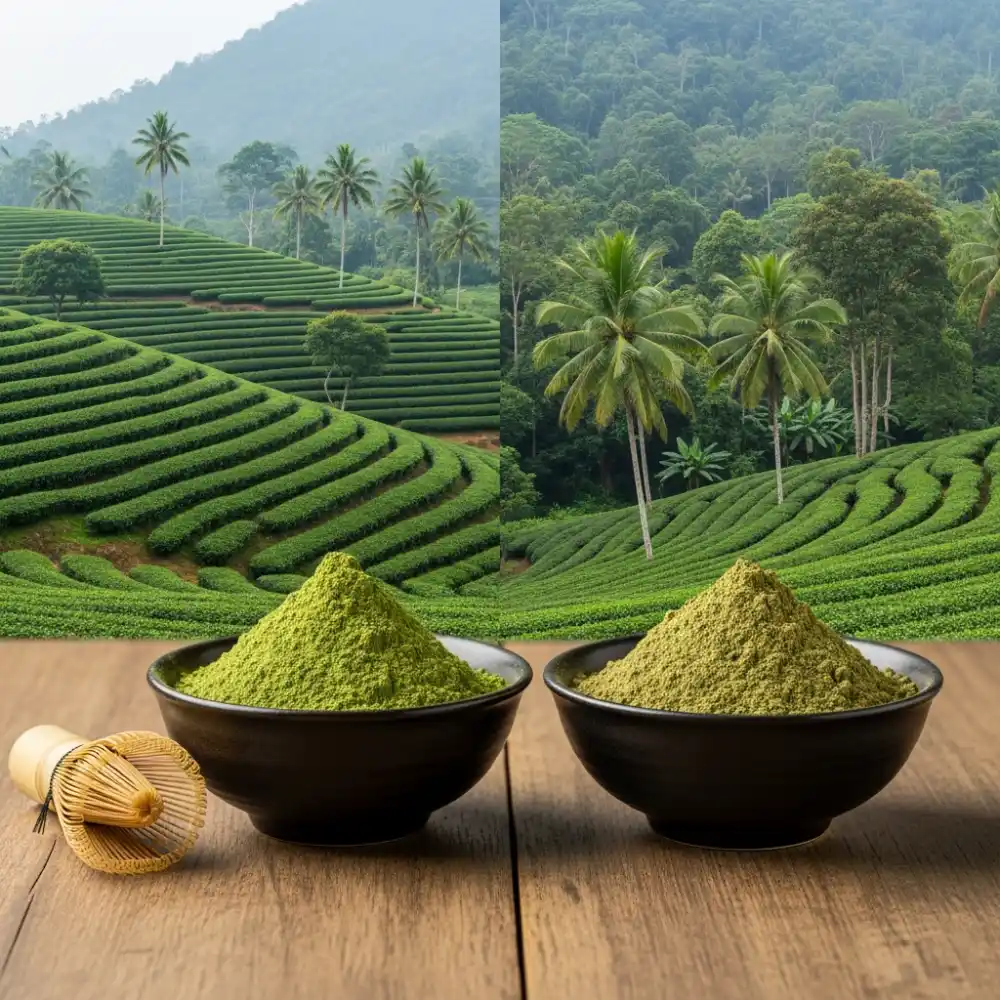
Organic Matcha Vs Regular Green Tea
The Fundamental Difference
Here's the key distinction: regular green tea is steeped and discarded, while matcha is consumed entirely. When you drink green tea, you're getting water-soluble compounds. With matcha, you consume the whole leaf—fiber, chlorophyll, and all the nutrients that don't dissolve in water.
This means matcha naturally contains more antioxidants, vitamins, and minerals per serving. But quality matters enormously. Low-grade matcha can be bitter and sandy, while ceremonial grade organic matcha is smooth, sweet, and nutrient-dense.
Nutritional Showdown
Organic Ceremonial Matcha (per 2g serving):
- 🟢 EGCG: 130mg (antioxidant powerhouse)
- ⚡ Caffeine: 68mg (with L-theanine balance)
- 🧘 L-theanine: 46mg (calm focus)
- 🌿 Chlorophyll: High (natural detox)
- 💚 Catechins: 105mg (anti-inflammatory)
- 🛡️ Vitamin C: 17mg (immunity boost)
Regular Green Tea (per 240ml cup):
- 🟢 EGCG: 25-90mg (varies widely)
- ⚡ Caffeine: 25-50mg (no L-theanine balance)
- 🧘 L-theanine: 5-15mg (minimal effect)
- 🌿 Chlorophyll: Low (not consumed)
- 💚 Catechins: 30-60mg (water-soluble only)
- 🛡️ Vitamin C: 2-5mg (minimal absorption)
Why Organic Matters in Tropical Climates
In Phuket's heat and humidity, your body works harder to process everything—including toxins from pesticides. Organic certification ensures tea plants are grown without synthetic pesticides, herbicides, or chemical fertilizers. When you're consuming the entire leaf (as with matcha), this becomes crucial.
Conventional tea farming often uses pesticides that can concentrate in the final product. Since you're drinking the whole leaf with matcha, organic certification provides essential peace of mind. Plus, organic farming typically produces tea with higher antioxidant levels—perfect for combating tropical sun exposure.
Organic Advantages:
- 🚫 No synthetic pesticide residues
- 🌱 Higher antioxidant concentrations
- 🐛 Biodiversity-friendly farming
- 💧 Cleaner water sources protection
- 🍃 Better for long-term soil health
- ✨ Often superior flavor profiles
Taste and Experience Comparison
Regular Green Tea: Light, sometimes grassy, can be bitter if over-steeped. Easy to prepare but quality varies wildly. Thirst-quenching but may lack complexity. Often needs honey or sugar to be palatable.
Organic Ceremonial Matcha: Rich umami flavor, naturally sweet, velvety texture. Complex preparation creates a ritual experience. Creamy mouthfeel, no additives needed. Each sip delivers concentrated flavor and nutrients.
In Phuket's climate, both can be refreshing, but matcha's sustained energy release and smooth taste make it ideal for tropical living. The preparation ritual also provides a mindful break from island hustle.
Energy and Focus Differences
Here's where matcha shines. Regular green tea provides a mild caffeine boost—helpful but often short-lived. Matcha delivers caffeine alongside L-theanine, creating what's called "calm alertness." Perfect for tropical living where you need sustained energy without jitters.
The difference is noticeable: green tea might give you an hour of alertness, while quality matcha can provide 3-4 hours of focused energy. In Phuket's heat, this sustained release prevents energy crashes that make you want to nap all afternoon.
Cost Analysis: Is Premium Worth It?
Let's be honest—organic ceremonial matcha costs more upfront. But consider the value per serving:
Regular Green Tea: ฿3-15 per cup, needs multiple cups for significant benefits, short duration of effects.
Organic Ceremonial Matcha: ฿45-80 per serving, but one serving provides nutrients equivalent to 10 cups of regular green tea, with 3-4 hours of sustained benefits.
When you factor in the comprehensive health benefits and time saved not re-brewing multiple cups, premium matcha often delivers better value per nutrient gram.
Environmental Impact
Organic matcha production typically has a smaller environmental footprint. Shade-growing (essential for quality matcha) naturally requires less water and creates habitat for beneficial insects. Organic certification means no chemical runoff affecting local waterways—important in pristine areas like Phuket.
Regular tea production can vary widely. Some operations are sustainable, others use intensive farming that depletes soil and requires heavy chemical inputs. The processing for matcha also generates less waste since the entire leaf is utilized.
Making the Right Choice for You
Choose regular green tea if: You're budget-conscious, prefer light flavors, drink tea occasionally, or just want simple hydration with mild benefits.
Choose organic ceremonial matcha if: You want maximum health benefits, appreciate ritual and complexity, seek sustained energy, prioritize organic certification, or want an authentic Japanese cultural experience.
The hybrid approach: Many of our customers enjoy both—regular green tea for casual hydration and ceremonial matcha for focused health benefits and special moments.
Quality Indicators for Both:
Green Tea:
- ✓ Whole leaves (not dust)
- ✓ Fresh, vibrant color
- ✓ Clear origin information
- ✓ Organic certification preferred
Matcha:
- ✓ Bright green color (not yellowish)
- ✓ Fine, smooth powder texture
- ✓ Japanese origin (preferably Uji)
- ✓ First harvest (ceremonial grade)
- ✓ Organic certification essential
Phuket-Specific Considerations
In tropical climates, both teas offer unique advantages. Green tea is excellent for hydration and mild cooling effects. Organic matcha provides more comprehensive nutrition support for dealing with heat stress, UV exposure, and the energy demands of island living.
For visitors and expats adjusting to Phuket's climate, organic matcha's detox properties can be particularly beneficial. The higher antioxidant content helps combat oxidative stress from increased sun exposure and dietary changes.
The Bottom Line
Both have their place, but they serve different purposes. Regular green tea is perfect for everyday hydration and mild health benefits. Organic ceremonial matcha is a wellness investment—delivering concentrated nutrition, sustained energy, and authentic cultural experience.
In Phuket's demanding climate, many people find that investing in quality organic matcha pays dividends in energy, health, and overall well-being. It's not just a drink—it's a daily ritual that supports both body and mind in paradise.